

تبديل اللغة Lang

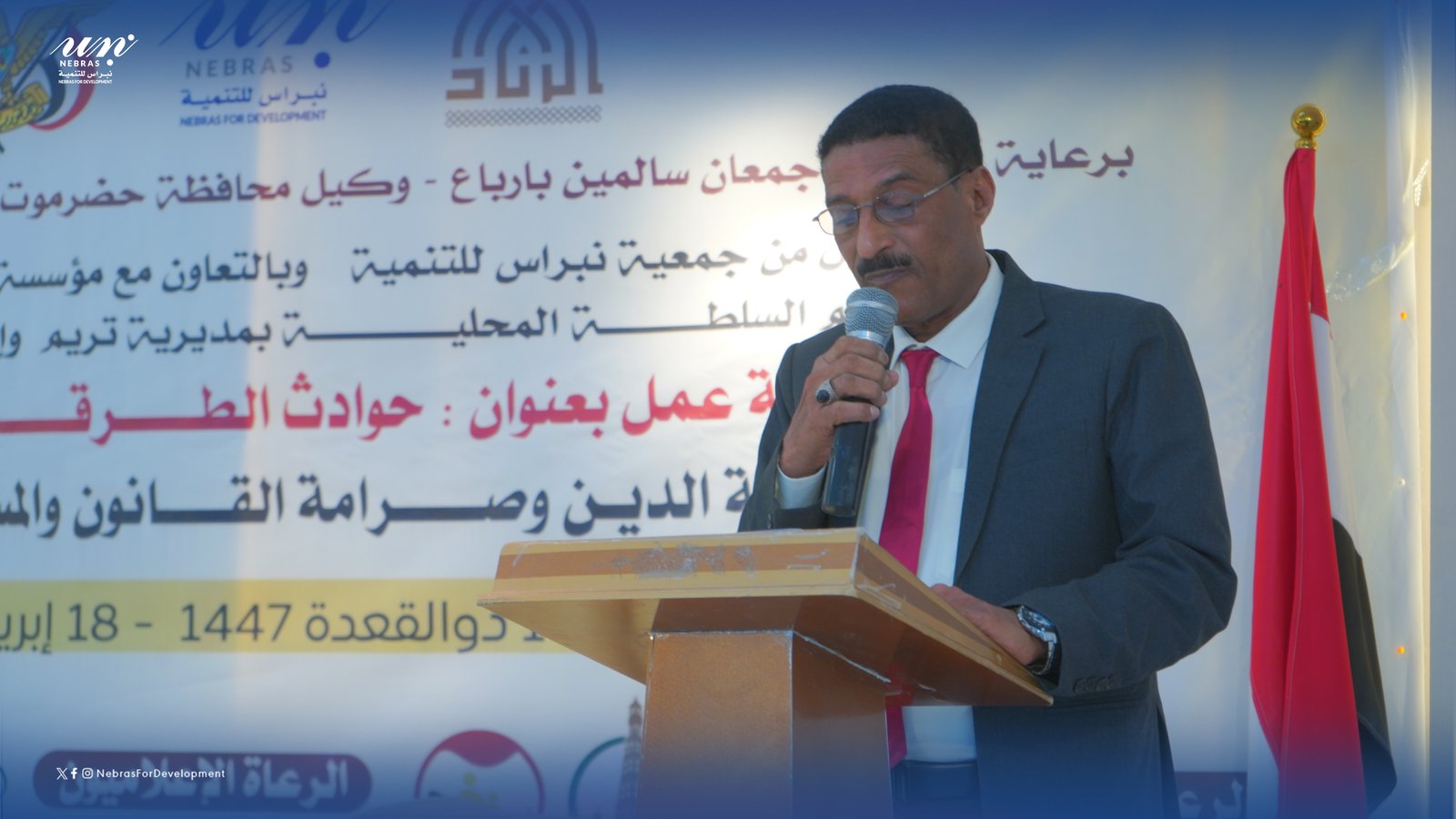
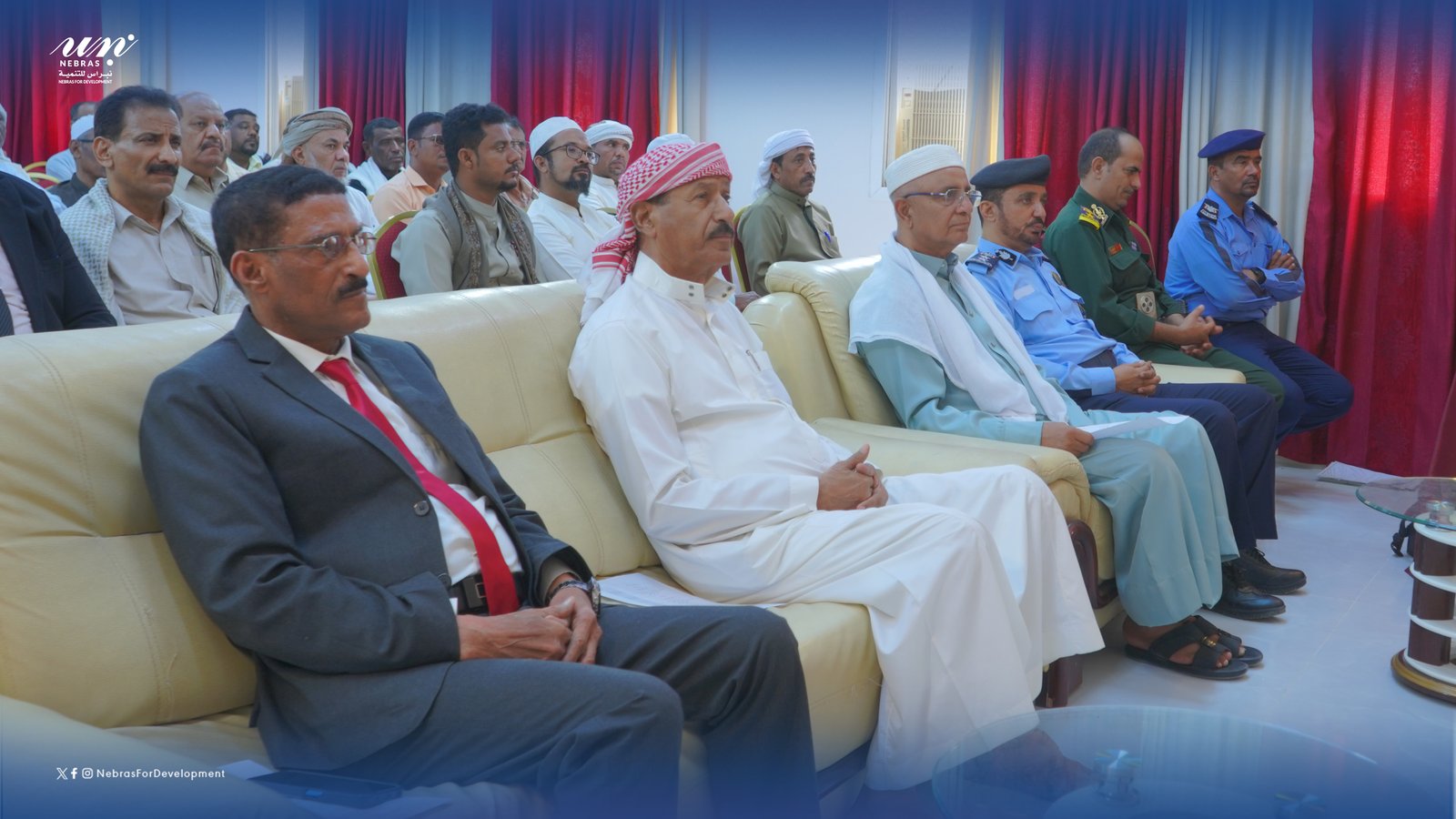
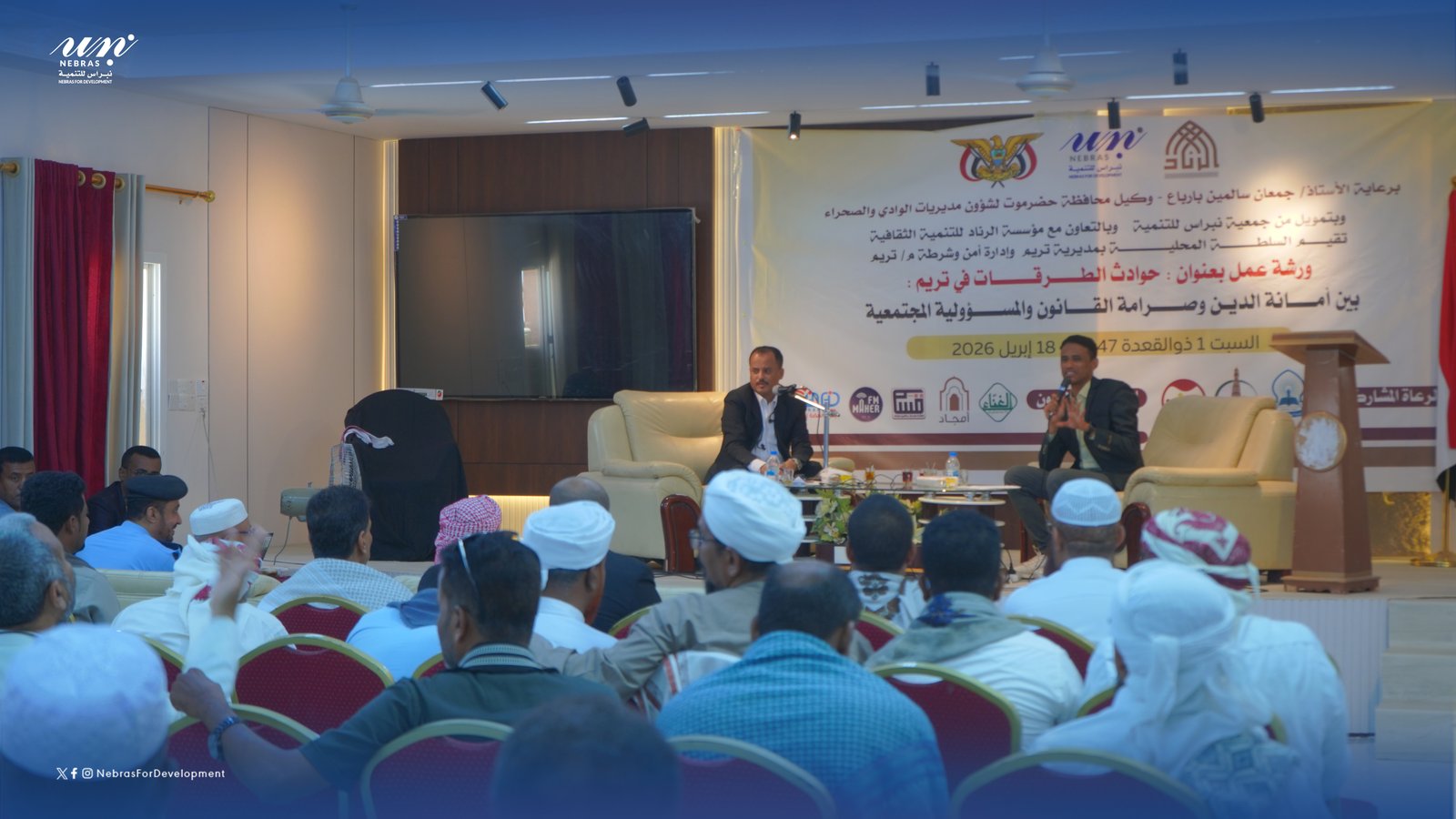
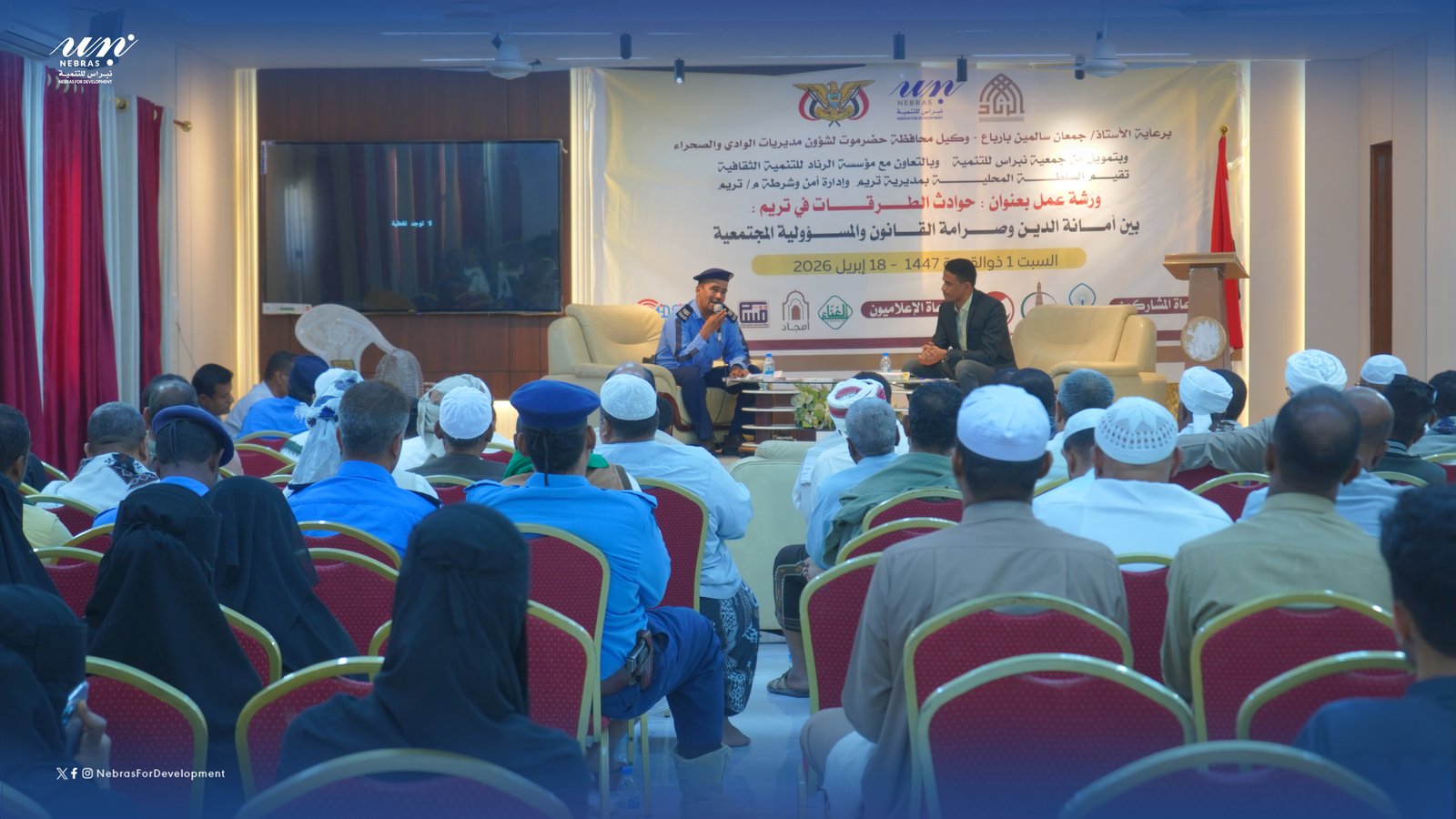
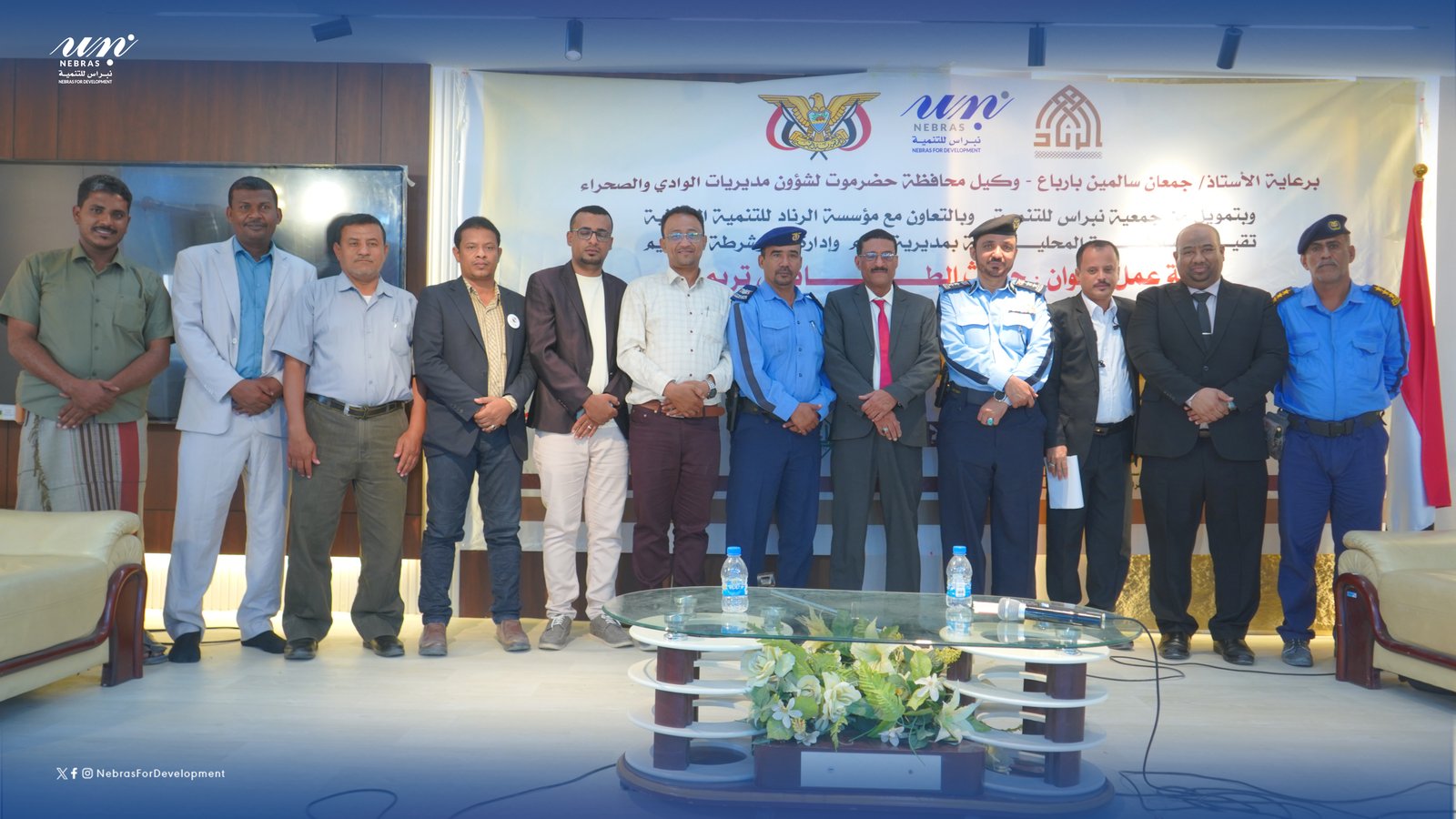
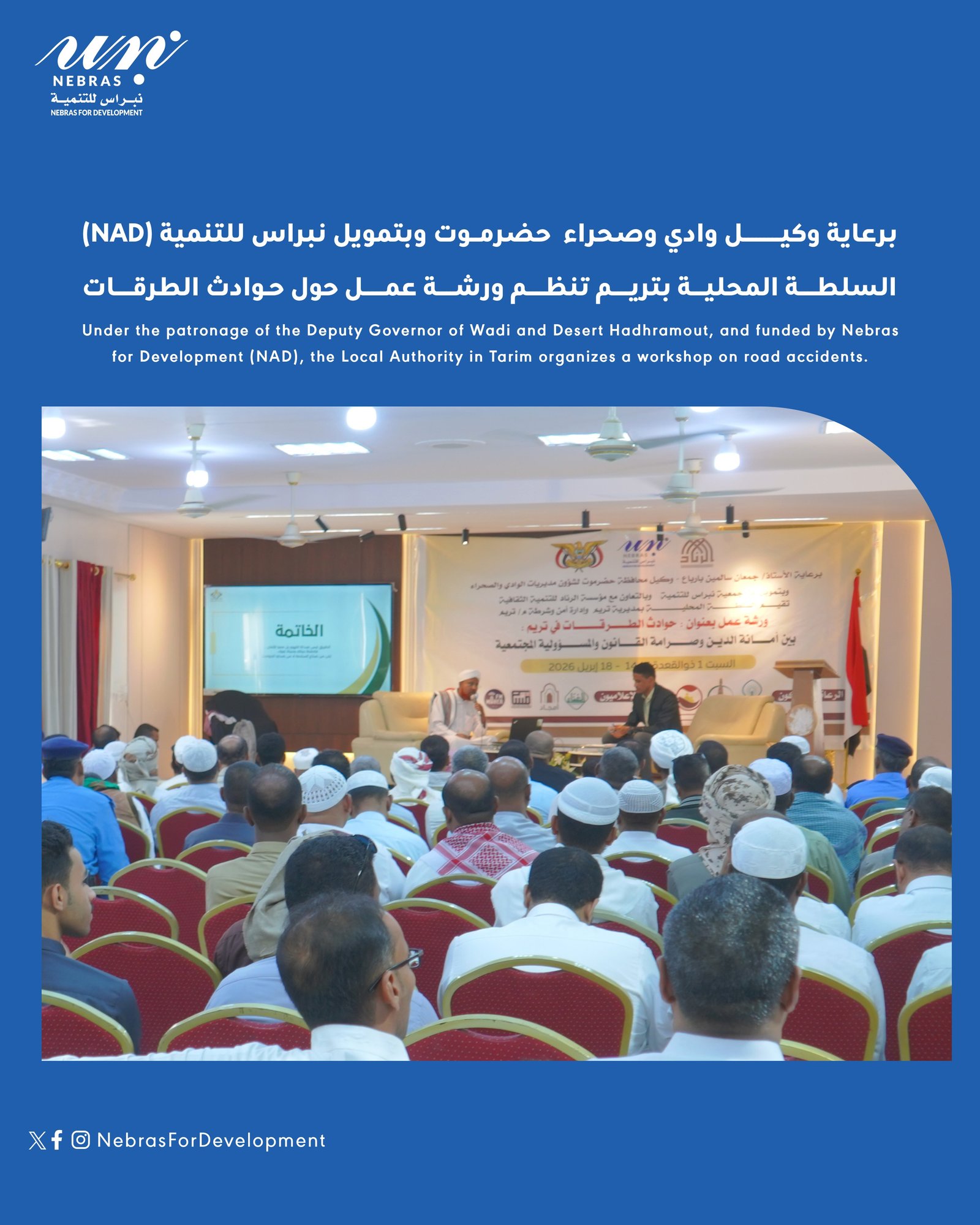
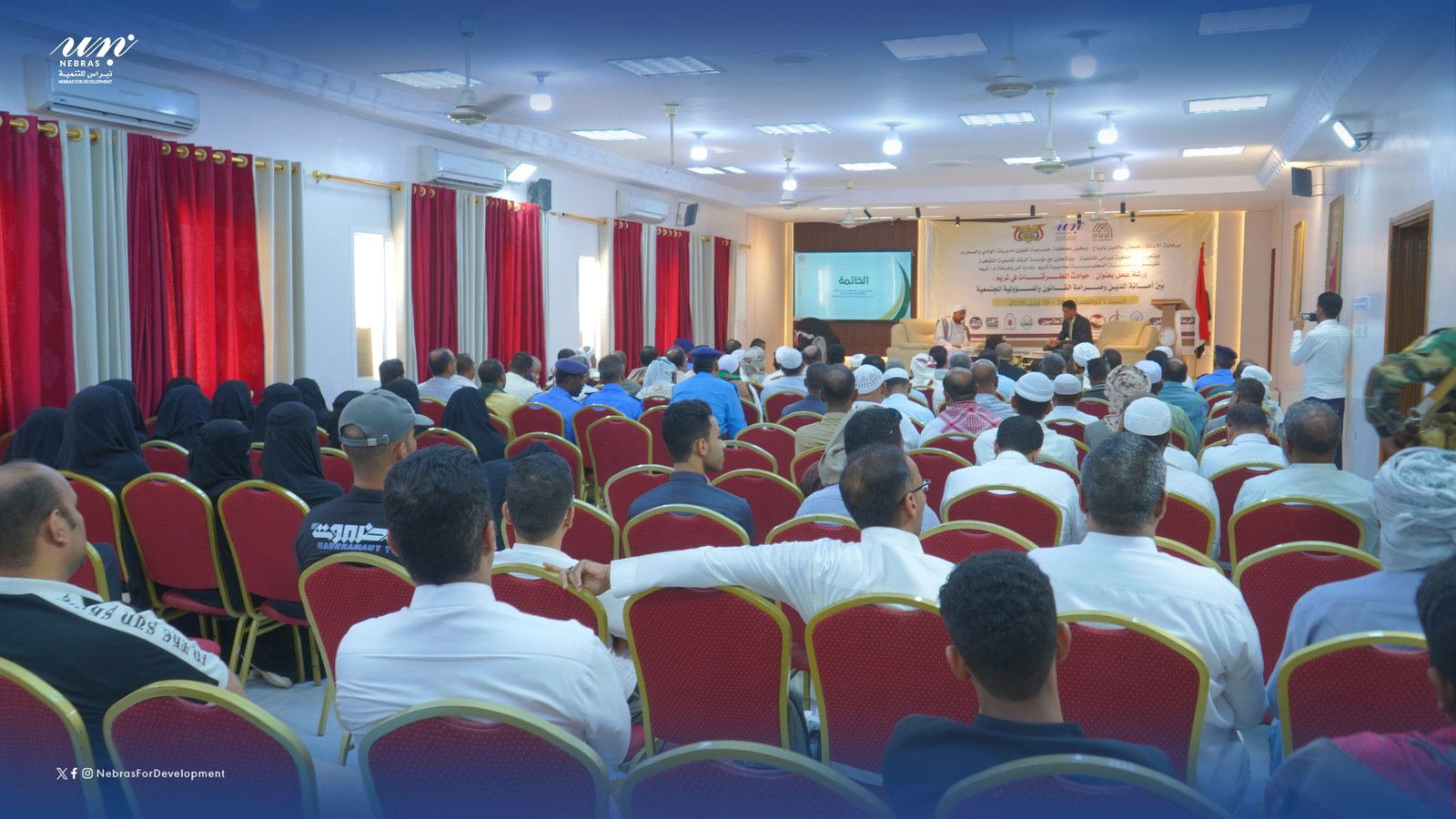
The Local Authority in Tarim District organized a specialized workshop on road accidents, reflecting a high level of community awareness and effective collaboration between government institutions and civil society organizations. The workshop was held on Saturday, 18 April 2026, in Tarim City under the patronage of Mr. Jamaan Salmeen Barba’a, Deputy Governor of Hadhramout for the Wadi and Desert Districts, with the participation of Mr. Abdulkarim Babtat, Director General of Tarim District, alongside a distinguished group of security, education, religious, and legal leaders, as well as community stakeholders and civil society activists.

The workshop was supported by Nebras for Development (NAD) in cooperation with Al-Rinad Development Foundation and several civil society organizations as part of a strategic vision aimed at strengthening community awareness and contributing to solutions for critical issues affecting citizens' daily lives.

The workshop addressed the issue of road accidents through a comprehensive approach covering several key themes. These included the ethical and religious importance of protecting human life, the legal responsibilities of drivers and the legal consequences of traffic accidents, and a security perspective presenting analytical insights supported by statistics on the scale and impact of road accidents. Together, these discussions provided participants with a comprehensive understanding of the issue and supported the development of practical solutions.

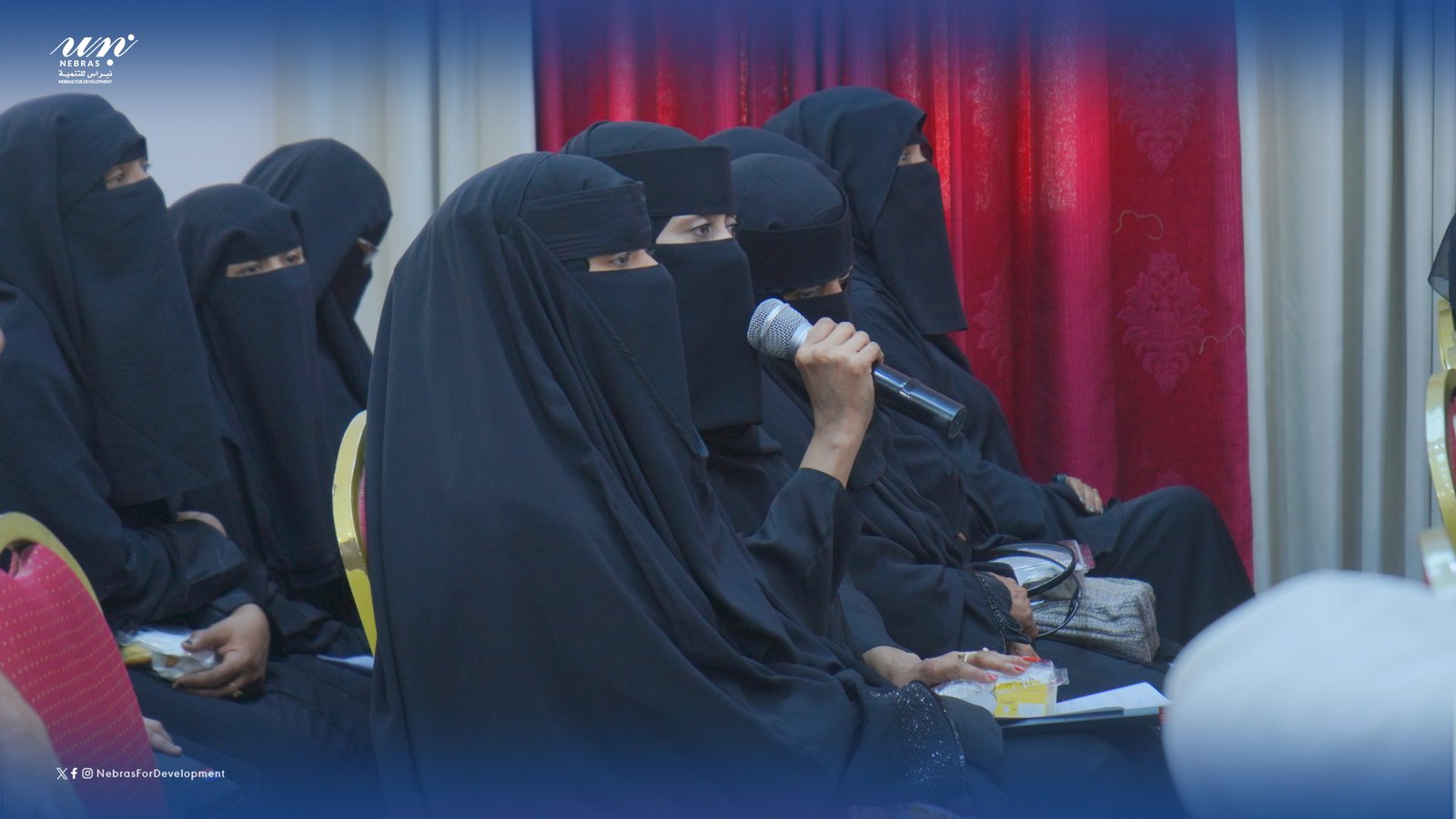
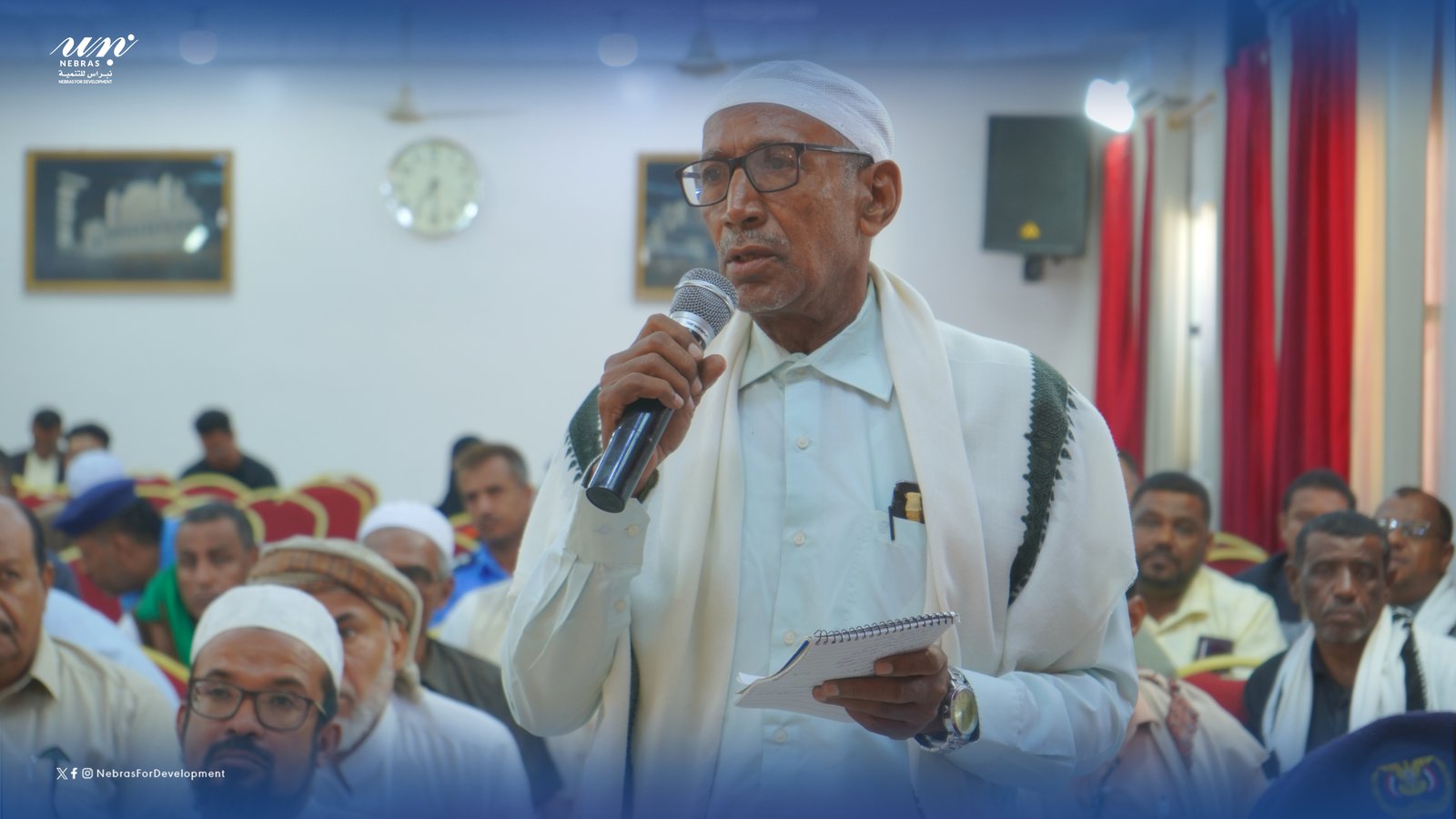
The event witnessed active participation from attendees representing various segments of society. Participants exchanged ideas and recommendations aimed at reducing traffic accidents, promoting adherence to traffic regulations, and improving road safety for individuals and the wider community.

At the conclusion of the workshop, participants issued several key recommendations emphasizing the need for stronger cooperation among families, educational institutions, security authorities, and the media. They also called for expanding public awareness campaigns, strengthening the enforcement of traffic laws and regulations, improving driver qualification mechanisms, and raising traffic awareness across all sectors of society.

Nebras for Development (NAD) reaffirmed its ongoing commitment to sustainable development and to building effective partnerships that empower local communities and enhance quality of life. Through its continued implementation of development programs and initiatives—particularly in education and community awareness—Nebras remains dedicated to creating positive change and promoting a culture of social responsibility.
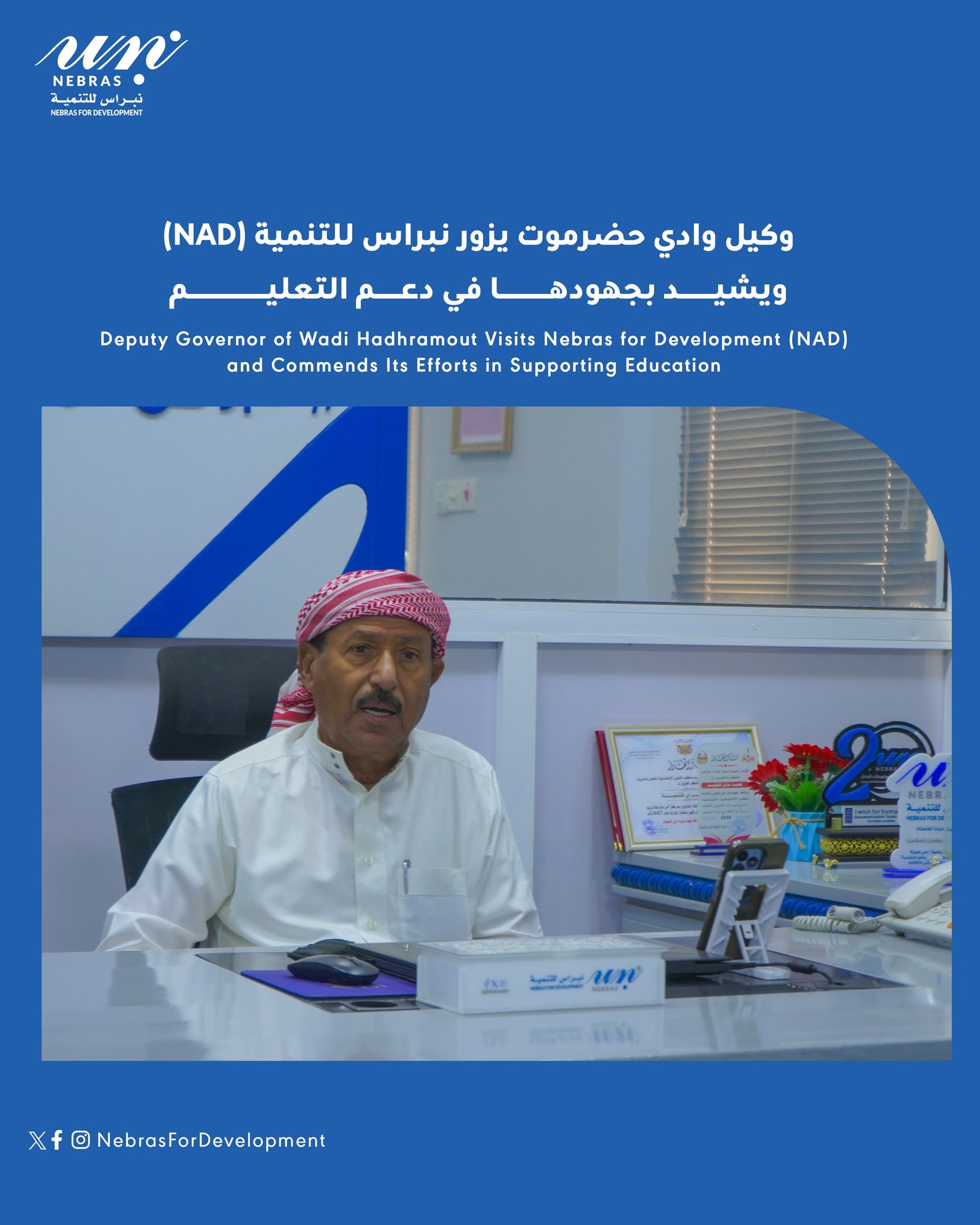
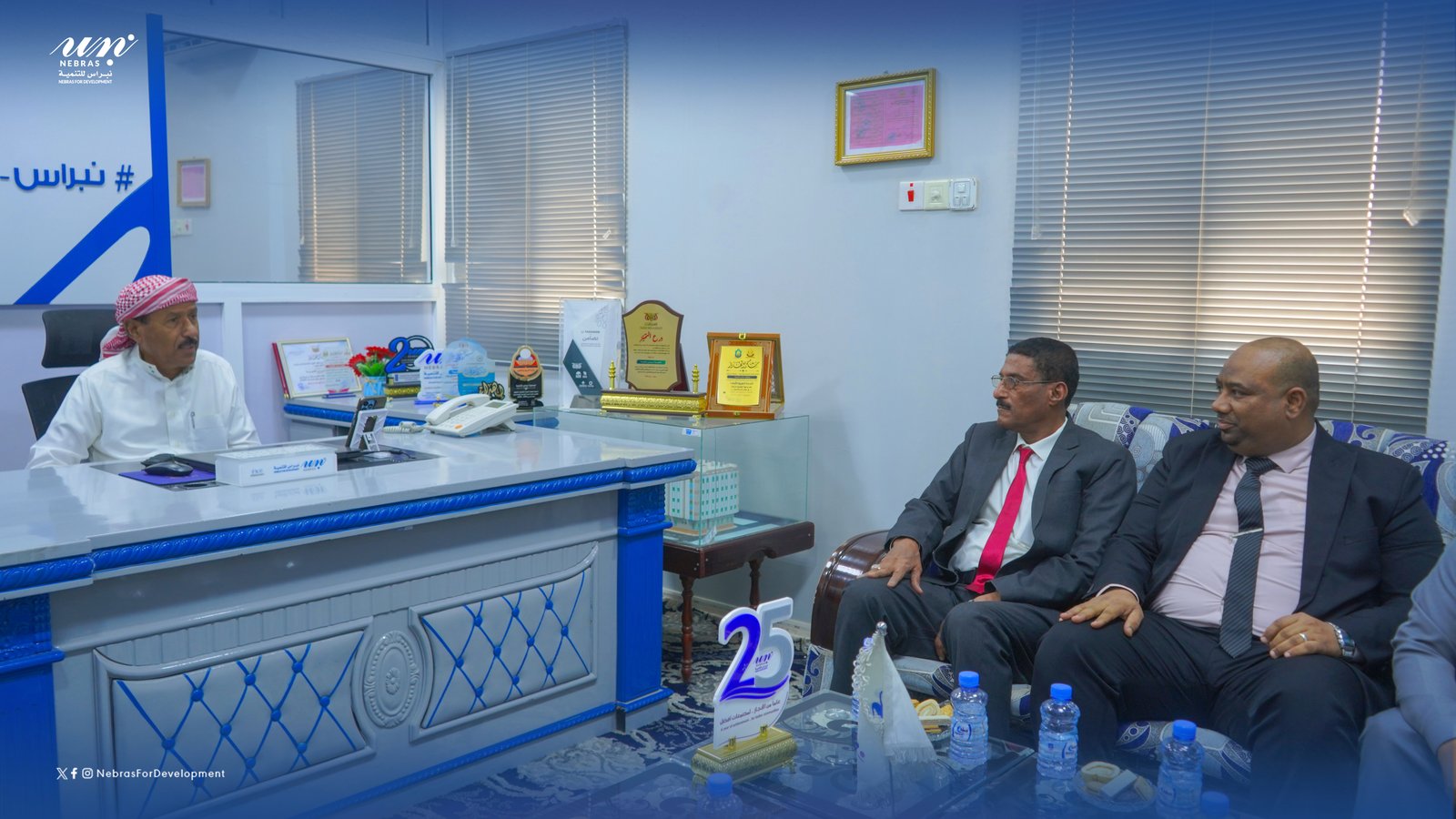
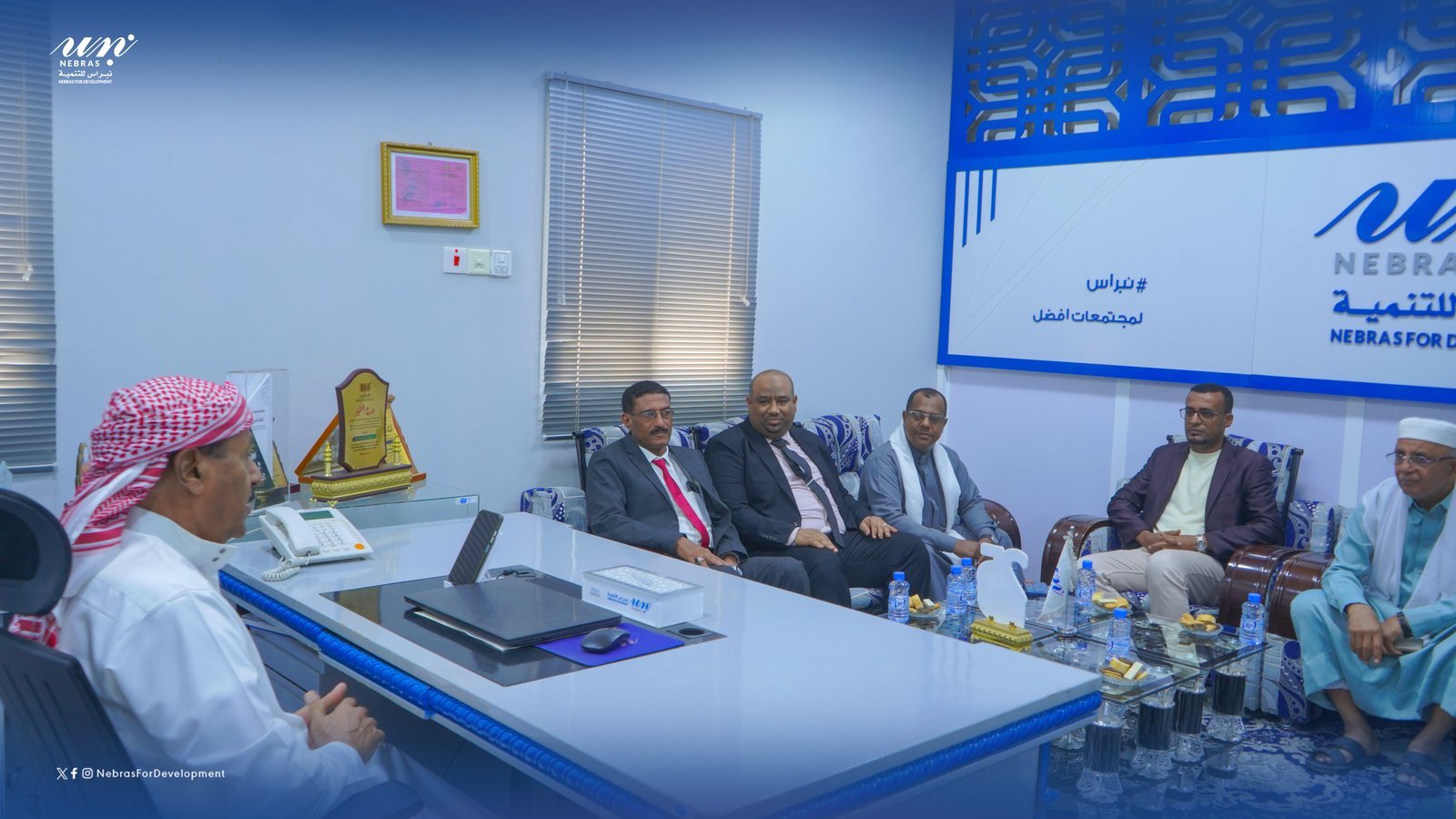
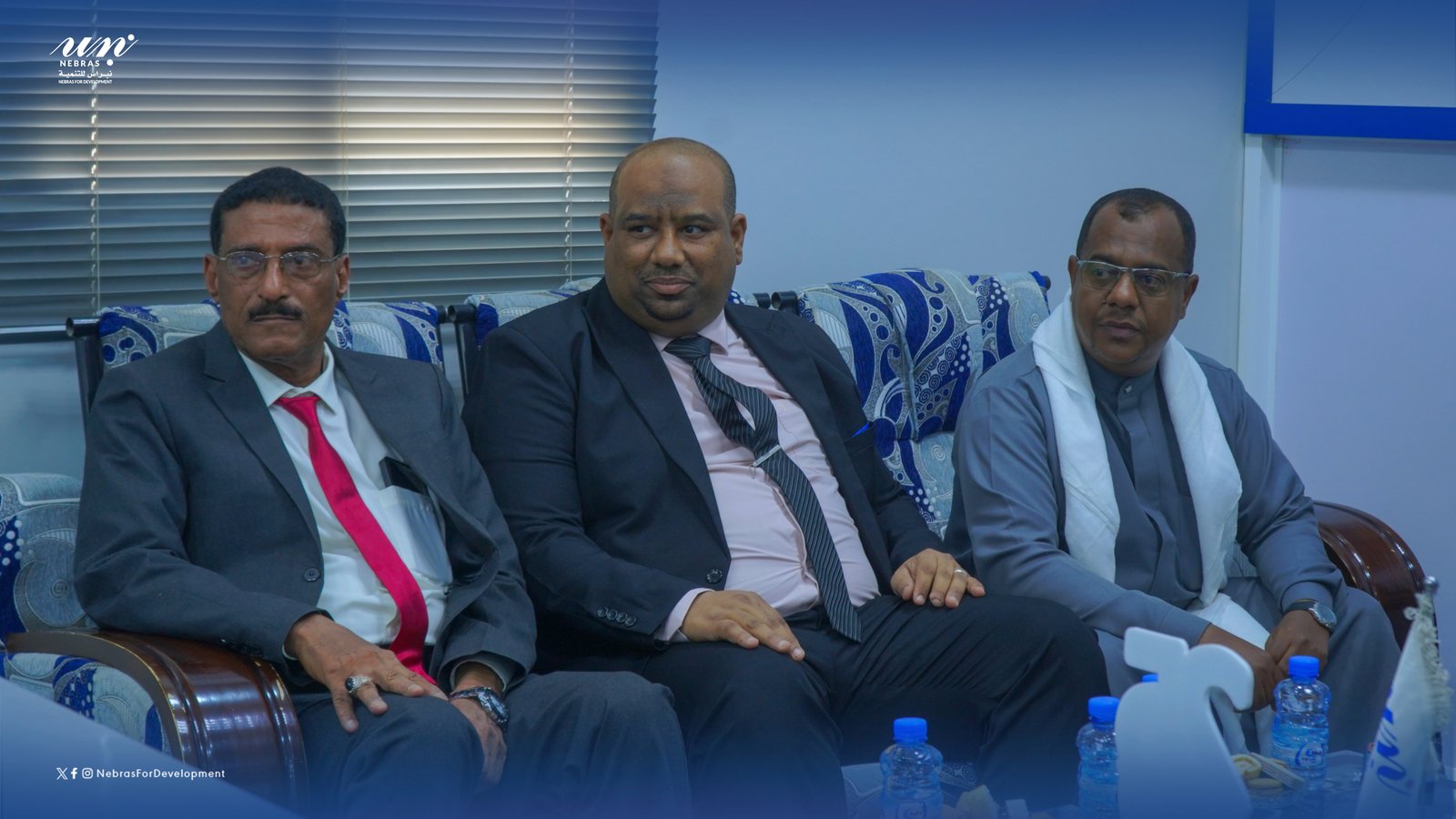
The Deputy Governor of Hadhramout for the Wadi and Desert Districts, Mr. Jamaan Salmeen Barba’a, accompanied by the Director General of Tarim District, Mr. Abdulkarim Babtat, visited Nebras for Development (NAD) as part of efforts to strengthen partnerships with civil society organizations and to learn about the association’s key development initiatives, particularly in the education sector.

The delegation was welcomed by Mr. Ashraf Issa Al-Hadri, Secretary General of the association, and Eng. Hassan Al-Sukkar, Executive Director, who presented an overview of the association’s development projects and initiatives in the fields of education and community development. They highlighted Nebras’ ongoing efforts to support the educational process and empower young people.

During the visit, both sides discussed opportunities to expand cooperation and strengthen partnerships to improve the quality and outcomes of education, ultimately serving the communities of the Wadi and Desert districts.

Mr. Barba’a praised the significant role played by Nebras for Development (NAD), emphasizing the organization's valuable contribution to supporting the education sector and advancing sustainable development. He also stressed the importance of close collaboration between government institutions and civil society organizations to achieve shared development goals.

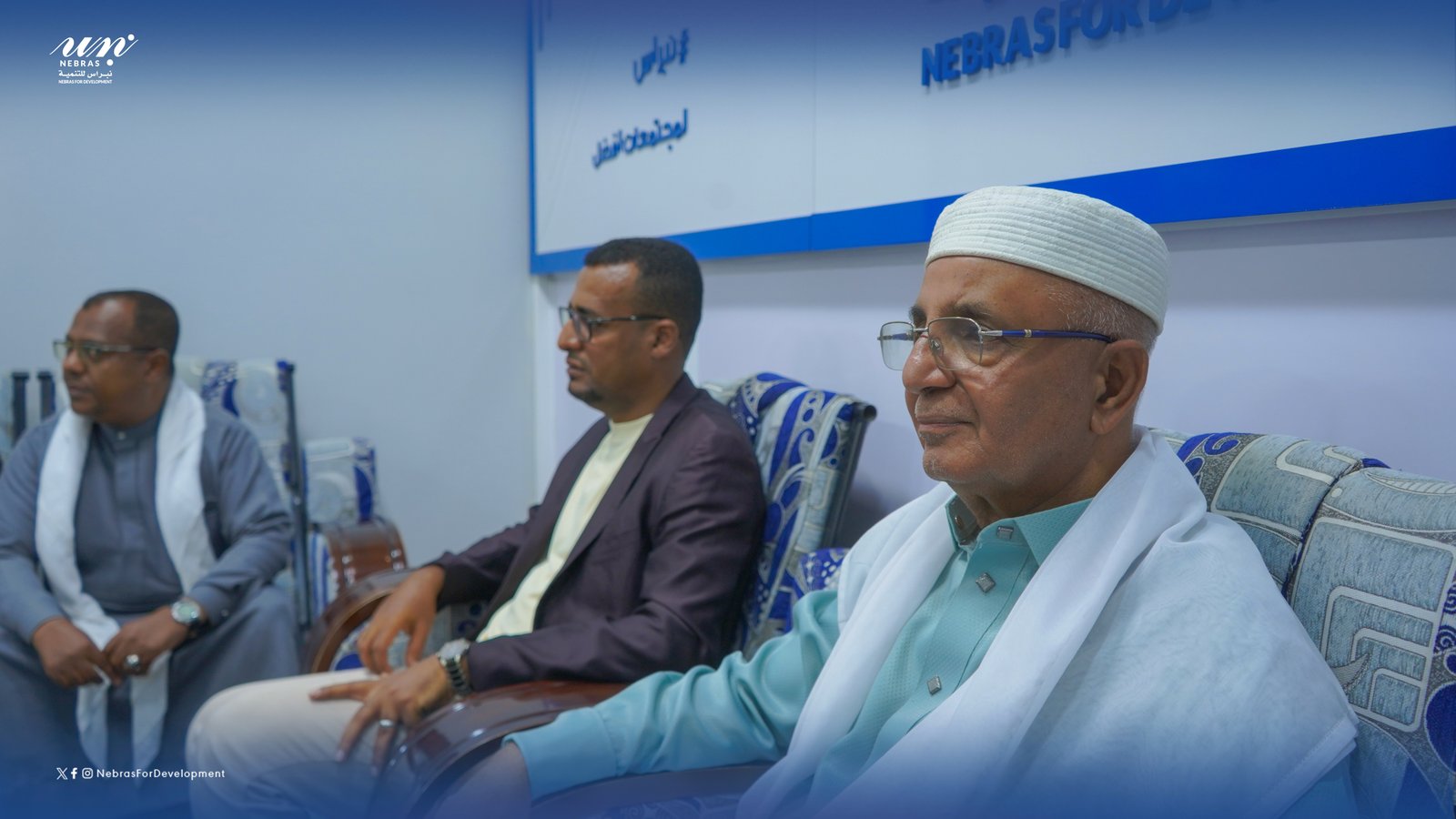
The visit was also attended by Mr. Saqqaf Al-Kaf, Advisor to the Governor of Hadhramout; Colonel Faiz Awad Al-Amri, Director General of Traffic Police in Wadi and Desert Hadhramout; Mr. Mohammed Bashuaib, Director of the Social Affairs and Labor Office in Tarim District; along with several officials from relevant institutions.


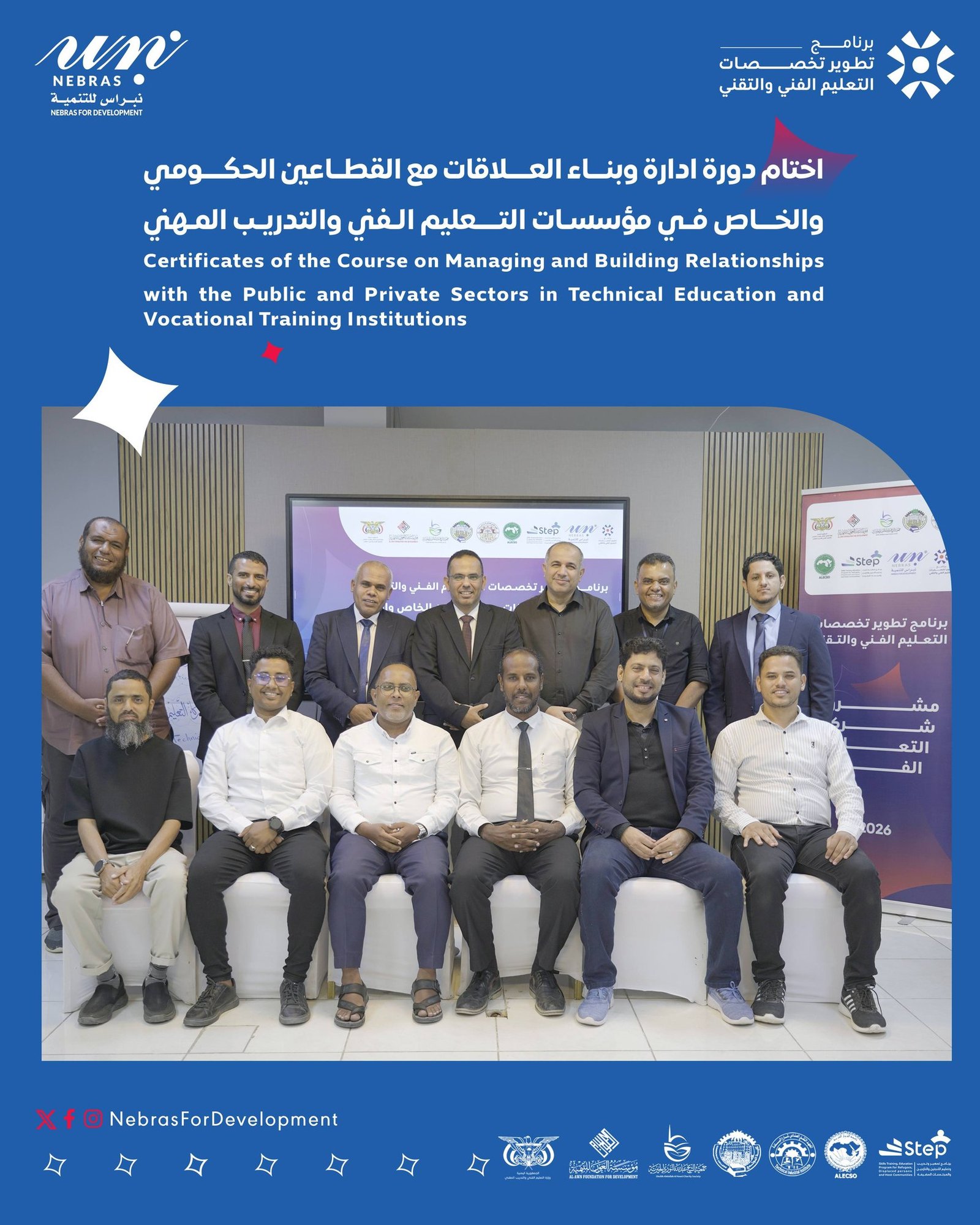
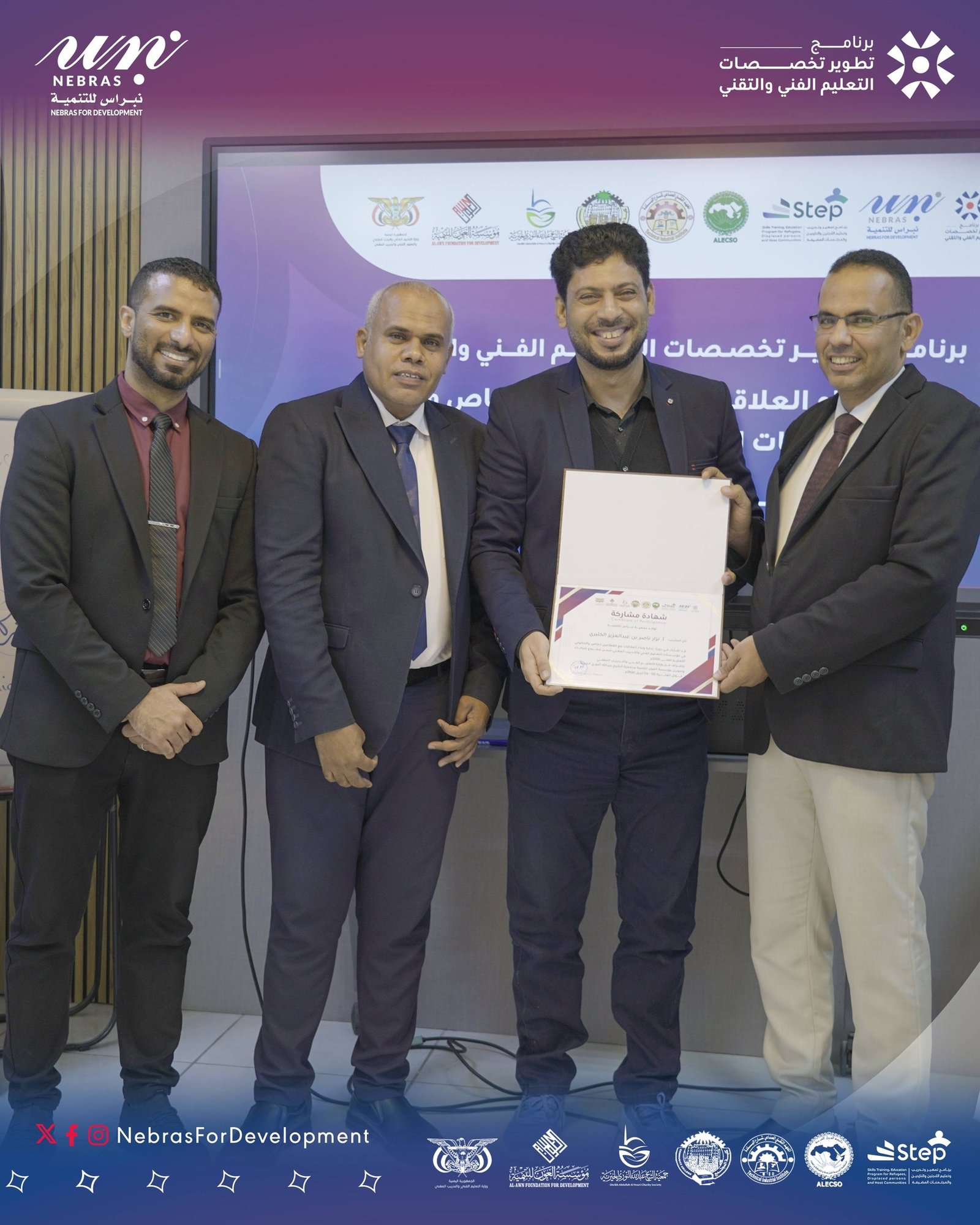
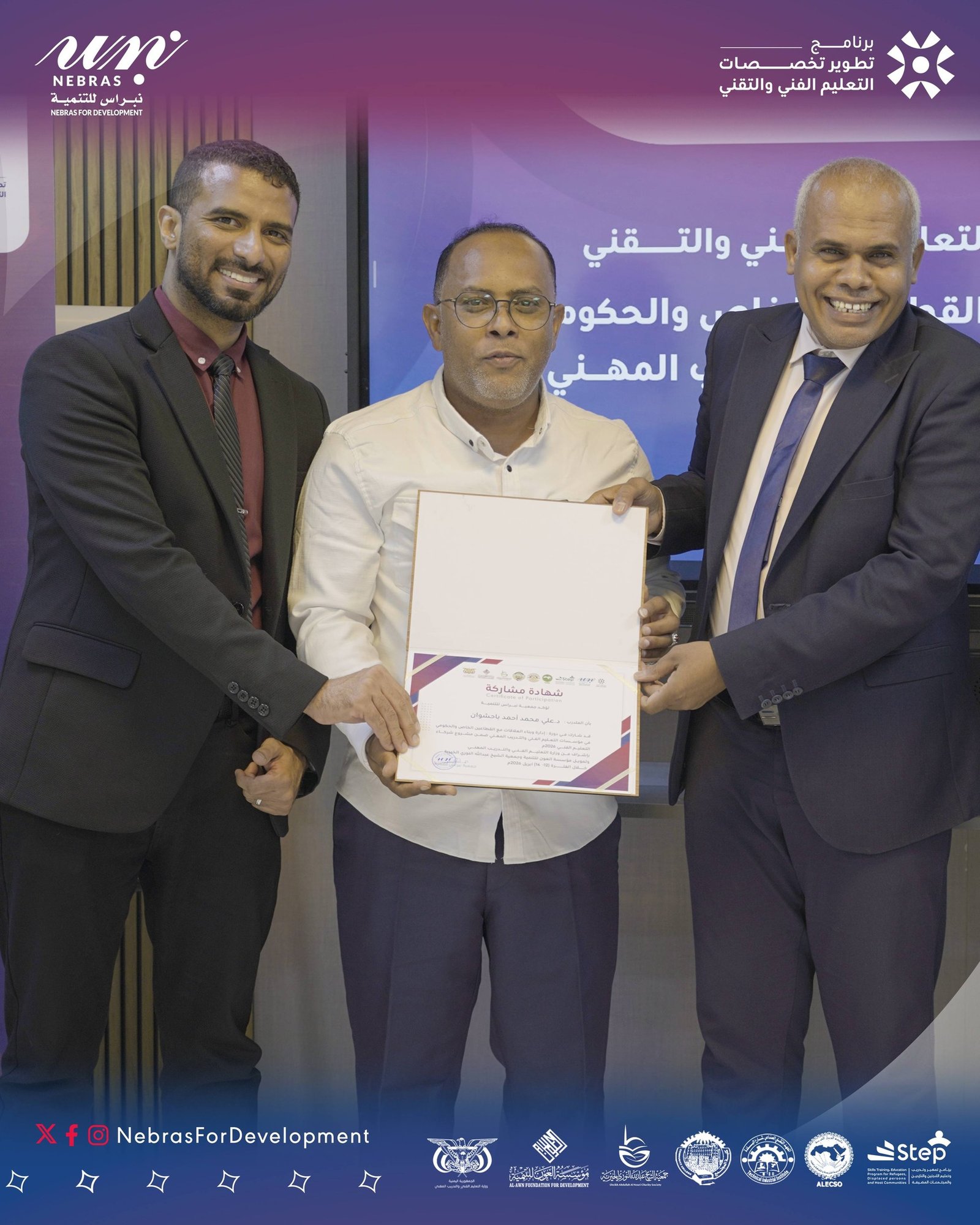
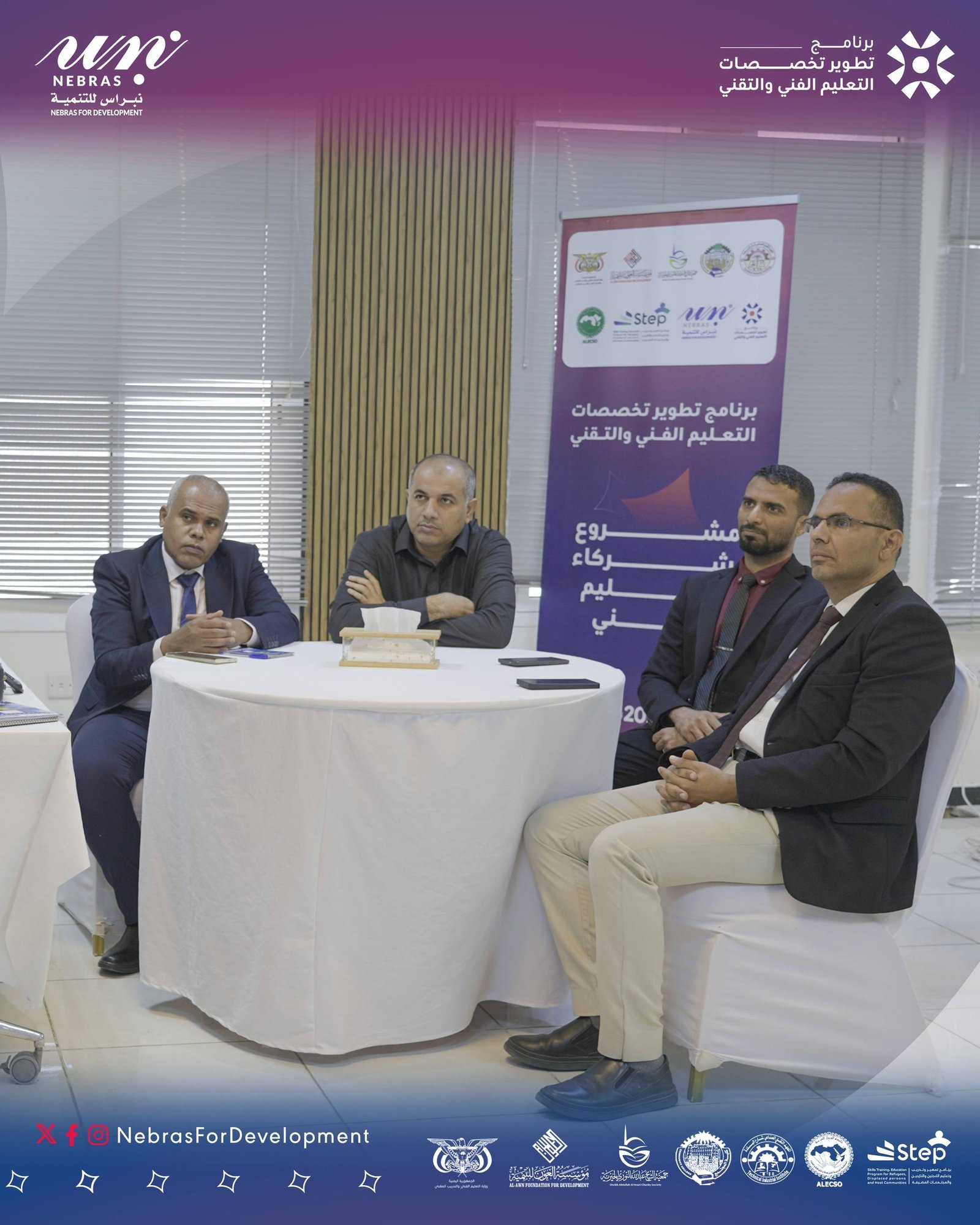
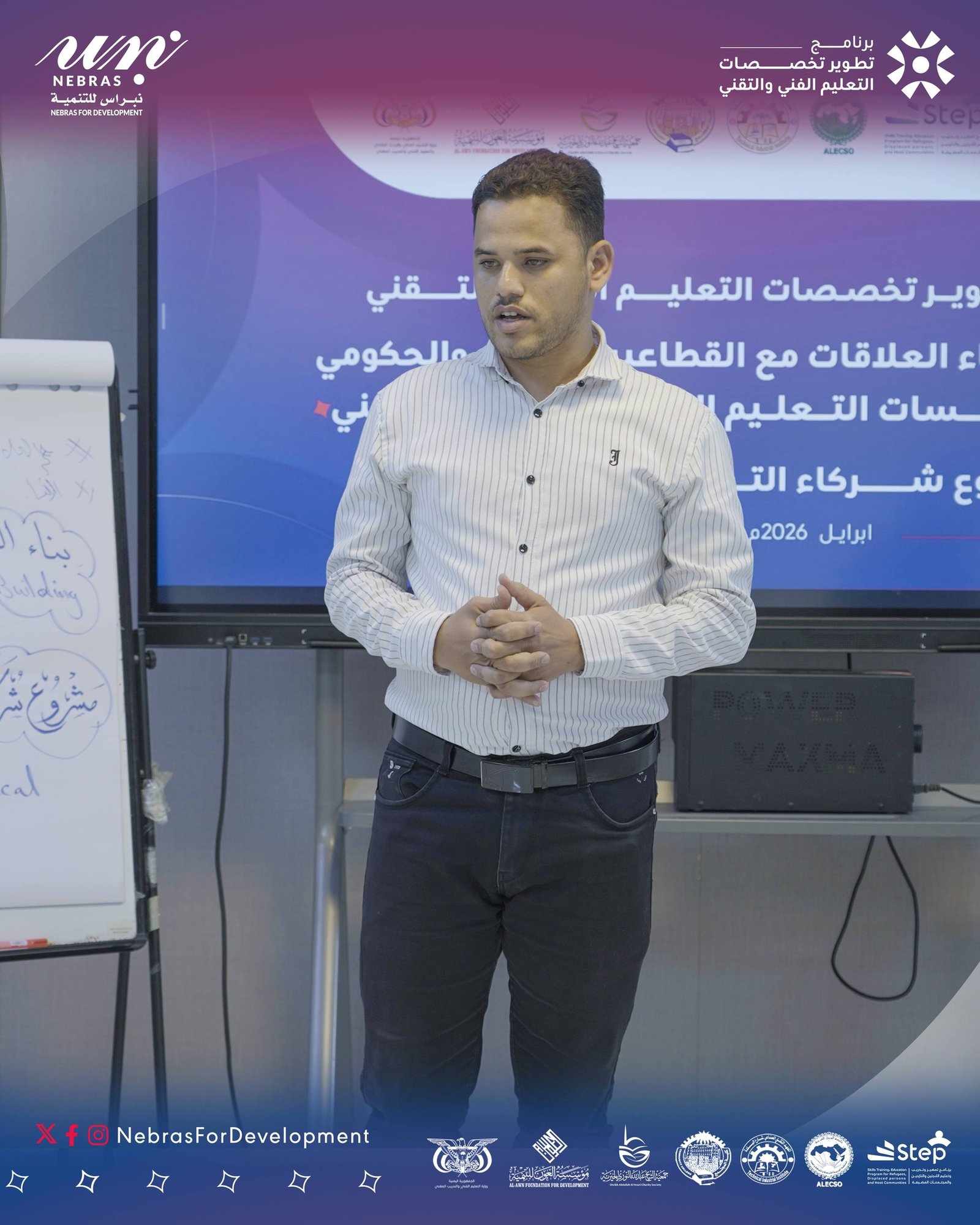
The specialized training program concluded after delivering two professional training courses: "Managing and Building Relationships with the Public and Private Sectors" and "Partnership Management and Strategic Relations with the Private Sector." The program was implemented under the Technical Education Partners Project 2026 by Nebras for Development (NAD), with joint funding from the Al-Awn Foundation for Development and the Sheikh Abdullah Al-Nouri Charity, under the supervision of the Ministry of Technical Education and Vocational Training.

The program focused on preparing "Technical Education Ambassadors" capable of building strategic alliances and strengthening partnerships between educational institutions and the labor market. Participants developed skills in negotiation, institutional communication, value proposition, drafting memoranda of understanding (MoUs), and building an effective digital presence, enabling them to promote technical education graduates as valuable human capital that meets local labor market needs.

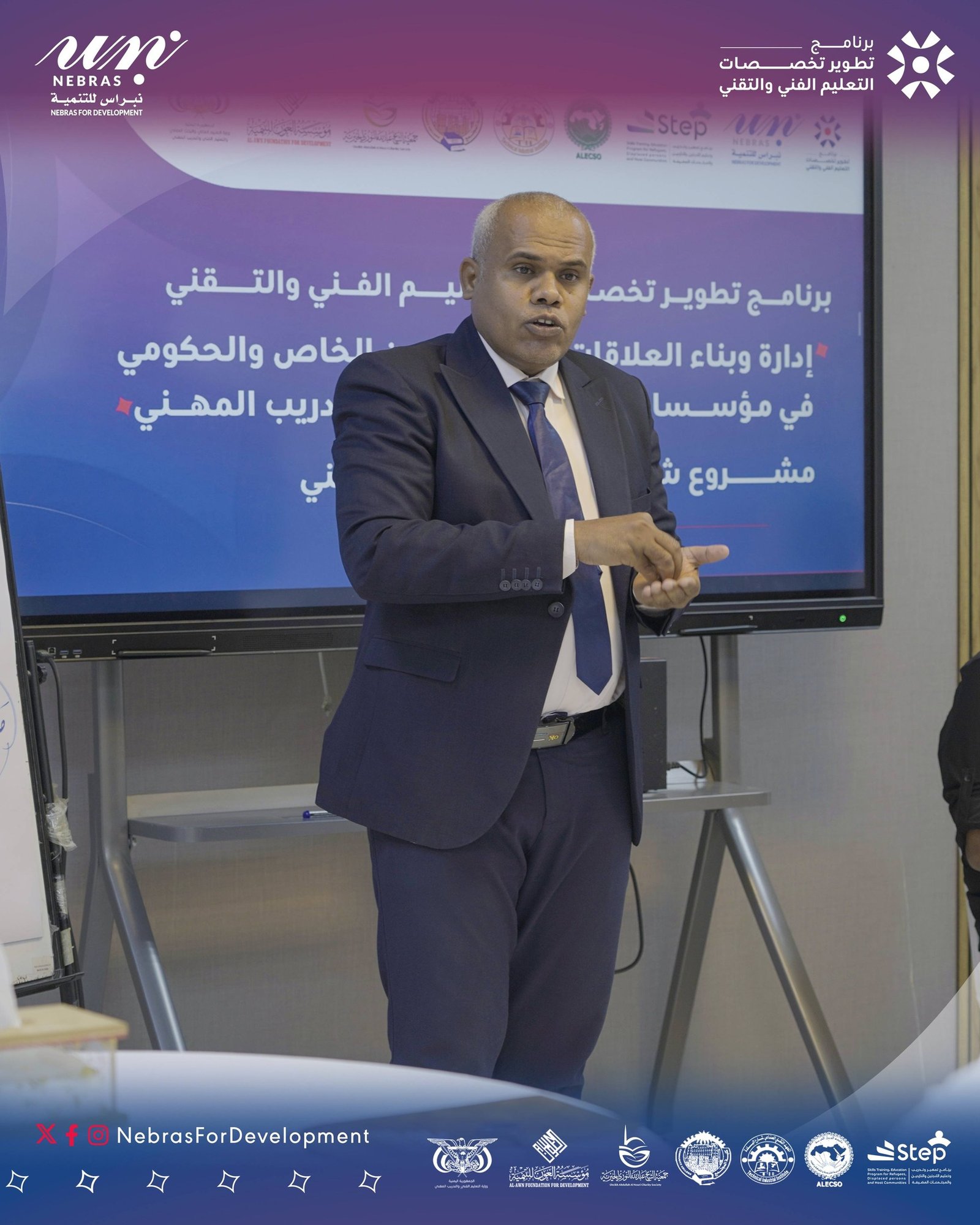
The training was delivered by Harith Mubarak Baqarf and Abubakr Mohammed Al-Saqqaf, who provided high-quality training that combined both theoretical knowledge and practical application.

The closing ceremony was attended by Dr. Salem Bajaber, Director of the Office of the Ministry of Technical Education and Vocational Training; Eng. Shehab Al-Saqqaf, Programs and Projects Specialist at the Al-Awn Foundation for Development; and Mr. Saeed Joban, Technical Education Partners Project Officer. They emphasized the importance of this initiative in transforming public relations departments into strategic marketing functions.

This program reflects the partners' strategic commitment to empowering technical and vocational education institutions, bridging the gap with the labor market, and achieving closer alignment between educational outcomes and market needs, thereby contributing to sustainable development in Hadhramout.

Nebras For Development